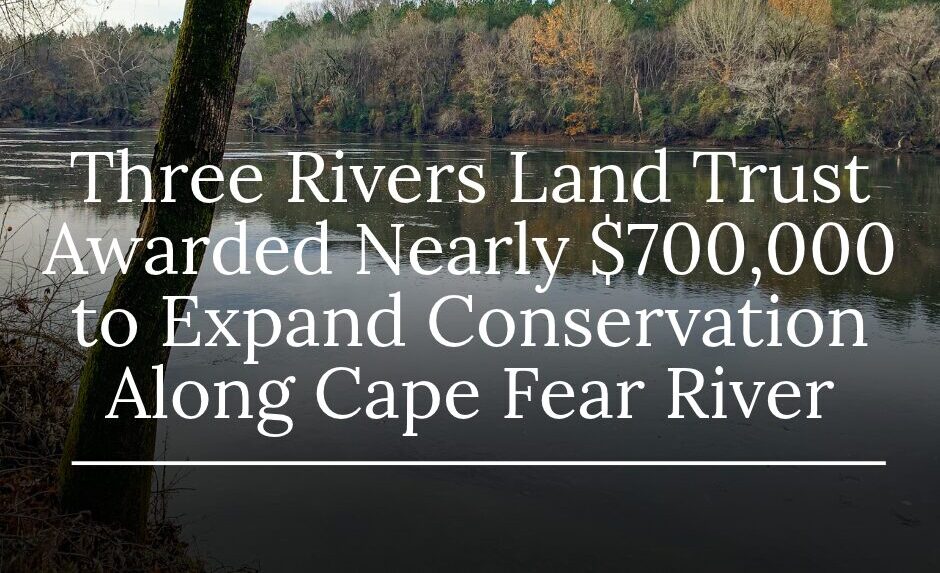
Three Rivers Land Trust (TRLT) has been awarded $694,915 from the North Carolina Land and Water Fund to permanently conserve 93 acres owned by Methodist University along the Cape Fear River in Cumberland County. The project will expand an existing network of conserved lands along the river while protecting an important natural resource used for education and research.
The property includes nearly one mile of frontage along the Cape Fear River and directly adjoins more than 400 acres of already conserved land. Once completed, the project will contribute to a contiguous conservation corridor encompassing nearly six miles of river frontage, further strengthening ongoing conservation efforts in the Cape Fear River basin.
Conserving forested lands along rivers helps maintain water quality by reducing erosion, filtering runoff, and protecting natural habitats. The conservation easement will help safeguard these benefits while ensuring the property remains protected for future generations.
“Projects like this are made possible by landowners who value conservation and funding partners who help bring it to life,” said Emily Callicutt, Director of Conservation at Three Rivers Land Trust. “Methodist University’s commitment to this property, combined with support from the North Carolina Land and Water Fund, allows us to build on the conservation work already underway along the Cape Fear River.”
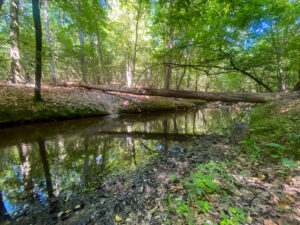
Beyond its environmental significance, the property serves as an outdoor classroom for Methodist University students. The wooded landscape provides excellent opportunities for hands-on learning.
“Methodist University is grateful to Three Rivers Land Trust for the conservation easement. The easement applies to a large and lovely MU-owned sylvan area abutting the Cape Fear River, which flows past the eastern side of the MU campus,” said MU President Stanley T. Wearden, PhD. “This wooded land, which some affectionately call the Monarch Forest (as in Methodist Monarchs), will now be conserved in perpetuity and will serve as an excellent learning
laboratory for students in MU’s life sciences and sustainability programs, particularly because it is home to some plant species that are rare in this part of North Carolina.”
Funding for this project is provided by the North Carolina General Assembly through the North Carolina Land and Water Fund.