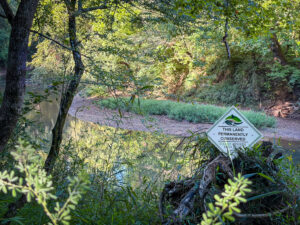
Paddlers and anglers alike frequent Abbotts Creek for its excellent fishing and scenic views. Now, 130 acres of farm and forest land along this important Yadkin River tributary are permanently conserved, helping ensure the beauty and natural character of Abbotts Creek remain for generations to come.
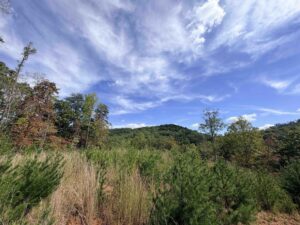
The newly conserved property contains 3,600 feet of frontage along Abbotts Creek and 56 acres of bottomland hardwood forest. These forests provide valuable habitat for wildlife while also contributing to the ecological health of the creek and surrounding landscape.
Abbotts Creek is an important tributary of the Yadkin River and is located at the mouth of High Rock Lake. Conserving land along the creek’s banks helps support water quality and contribute to the health of the broader Yadkin River Basin. By placing a conservation easement on this property with Three Rivers Land Trust, the landowners are helping ensure the land and natural resources connected to Abbots Creek are protected forever.
“The conservation easement placed on this property ensures that this land will continue to provide habitat for wildlife and protect the water quality of Abbotts Creek in perpetuity,” said Emily Callicutt, Director of Conservation with Three Rivers Land Trust
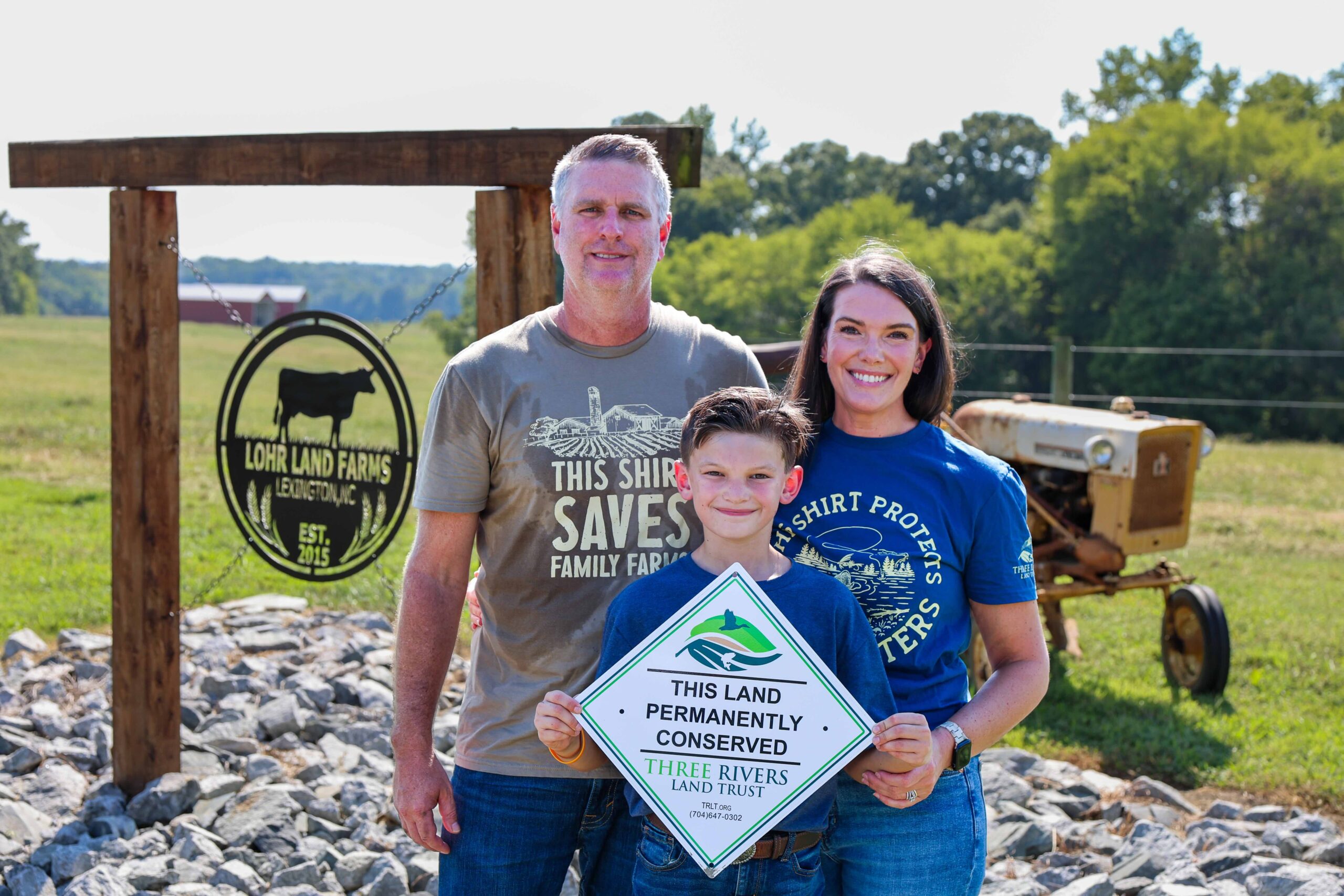
For the landowners, Tyler and Meghan Forrest, conserving the property was motivated by their love of the land and the wildlife that call their farm home. They also wanted to ensure that future generations would have the opportunity to experience and enjoy the place they have called home.
“We wanted to make sure this place was conserved so that our son, Luke, and the next generations have the opportunity to experience this place,” said Tyler and Meghan Forrest.
Through partnerships with private landowners and conservation supporters, Three Rivers Land Trust continues its mission of conserving the lands, waters, and wildlife habitat that define central North Carolina. Conservation easements allow landowners to permanently conserve their property while keeping the land in private ownership.
Funding for this project was provided by the North Carolina General Assembly through the North Carolina Land and Water Fund.